

Table of Contents
Introduction
Have you ever replayed the same conversation in your mind over and over again? Or spent hours worrying about something that hasn’t even happened yet?
If your answer is yes, you’re not alone.
Overthinking is something almost everyone experiences at some point in life. While thinking helps us solve problems, overthinking does the opposite—it traps us in endless loops of worry, fear, and self-doubt. Instead of finding solutions, we become mentally exhausted.
The good news? Once you understand the psychology behind overthinking, you can begin to break free from it.
Let’s explore why our minds overthink and, more importantly, how to stop.
What Is Overthinking?
Overthinking is the habit of analyzing situations, conversations, or future events far more than necessary. It often involves imagining worst-case scenarios, replaying past mistakes, or worrying about things outside your control.
Rather than helping you make better decisions, overthinking usually leads to stress, anxiety, indecision, and mental fatigue.
Psychologists generally describe overthinking in two common forms:
- Rumination: Constantly thinking about past mistakes or regrets.
- Worry: Repeatedly imagining negative outcomes that may never happen.
Both patterns consume your mental energy without bringing real solutions.
Why Do We Overthink?
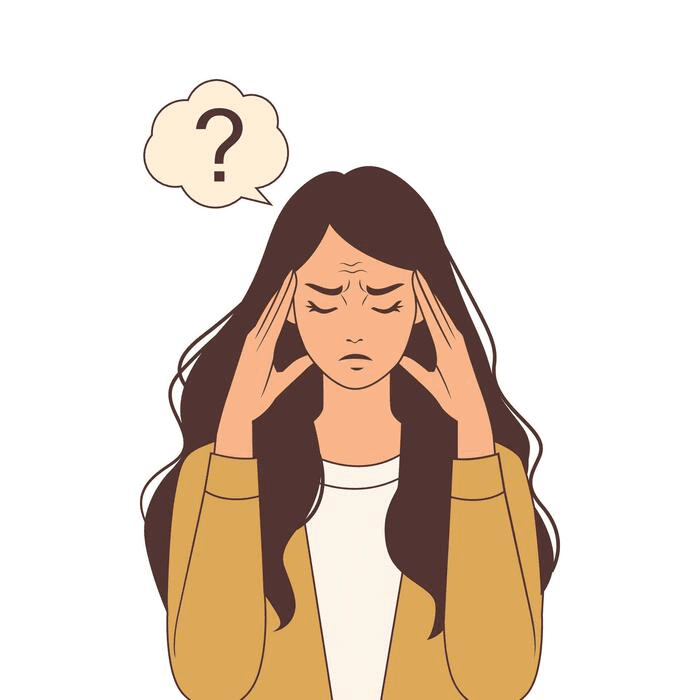
Our brains are naturally designed to protect us from danger. Thousands of years ago, constantly scanning for threats helped humans survive.
Today, however, that same survival instinct often works against us. Instead of protecting us from wild animals, our minds become busy worrying about careers, relationships, money, or what others think about us.
Common reasons people overthink include:
- Fear of making the wrong decision
- Perfectionism
- Low self-confidence
- Anxiety about the future
- Past failures or painful experiences
- Seeking complete certainty before taking action
Ironically, the more certainty we seek, the more uncertain we often feel.
Signs You’re Overthinking
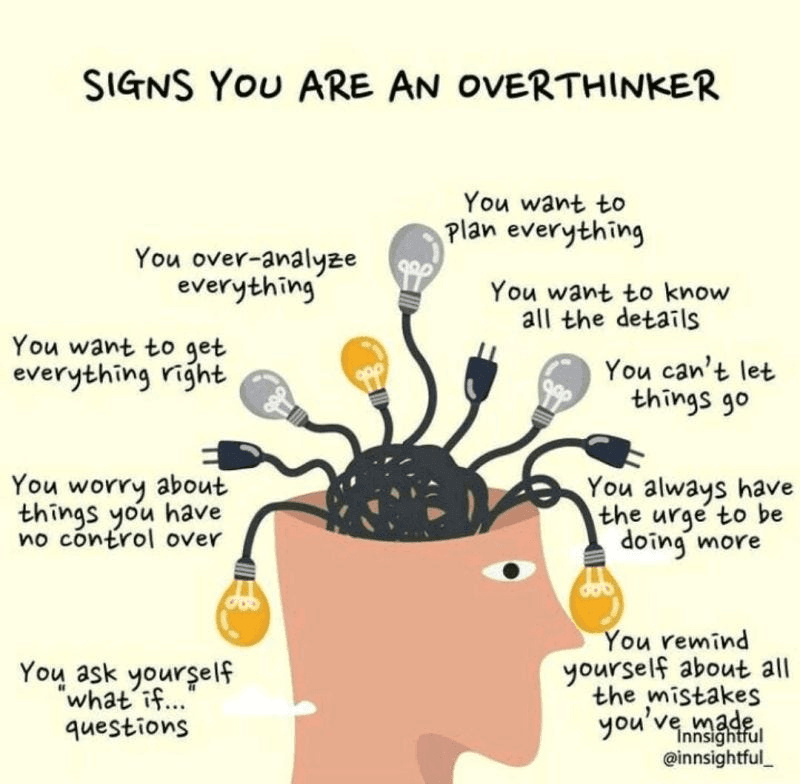
Sometimes, overthinking becomes so normal that we don’t even realize we’re doing it.
Here are some common signs:
- You replay conversations long after they’ve ended.
- You constantly imagine worst-case scenarios.
- Small decisions feel overwhelming.
- You struggle to fall asleep because your mind won’t stop racing.
- You seek reassurance from others repeatedly.
- You procrastinate because you’re afraid of making mistakes.
- You feel mentally exhausted despite doing very little physically.
If several of these sound familiar, your mind may simply need a healthier way to process thoughts.
7 Practical Ways to Stop Overthinking
1. Ask Yourself: “Can I Control This?”
One of the fastest ways to reduce overthinking is separating what you can control from what you can’t.
Focus your energy only on actions you can take today.
Everything else deserves your acceptance—not your anxiety.
2. Stop Chasing Perfect Decisions
Many people overthink because they want the perfect answer.
But life rarely offers perfect choices.
Instead of waiting for certainty, make the best decision with the information you have today.
Remember:
Progress beats perfection every single time.
3. Write Your Thoughts Down
Your brain is designed for thinking—not storing endless worries.
Writing your thoughts in a journal helps organize your emotions and often reveals that many fears aren’t as big as they seemed.
Sometimes clarity begins with a blank page.
4. Take Immediate Action
Action interrupts overthinking.
Instead of spending another hour thinking about starting something…
Start.
Send the email.
Apply for the job.
Begin the workout.
Read the first page.
Small actions silence unnecessary thoughts.
5. Practice Mindfulness

Mindfulness teaches you to focus on the present instead of worrying about yesterday or tomorrow.
Even spending five minutes focusing on your breathing can calm an overactive mind.
Peace grows when attention stays in the present moment.
6. Limit Information Overload
Too much information often creates too much confusion.
Constant scrolling, endless advice, and comparing yourself with others can increase anxiety.
Sometimes the best decision is to stop consuming more information and start using what you already know.
7. Be Kind to Yourself
Everyone makes mistakes.
Everyone has uncertain days.
Stop expecting yourself to have every answer.
Treat yourself with the same kindness you would offer a close friend.
Self-compassion is one of the most powerful antidotes to overthinking.
Final Thoughts

Overthinking often feels like you’re solving problems, but in reality, you’re usually postponing action. The mind keeps searching for certainty that may never come, leaving you stuck in a cycle of stress and self-doubt.
The way forward isn’t to think more—it’s to think better and act sooner. Small steps, imperfect decisions, and consistent action will always take you further than endless analysis.
Remember, your thoughts don’t define your future—your actions do.
🌿 A Thought to Leave You With
“The mind is a wonderful servant but a terrible master. Don’t let your thoughts control your life—learn to guide them with courage, clarity, and action.”
FAQs
Is overthinking a mental illness?
No. Overthinking itself isn’t a mental illness, but it can be linked to conditions such as anxiety or depression if it becomes persistent and significantly affects daily life.
Can overthinking be stopped completely?
Probably not. Everyone overthinks sometimes. The goal isn’t to eliminate every worrying thought—it’s to stop letting those thoughts control your decisions.
Why do I overthink at night?
Nighttime is often quieter, with fewer distractions, making it easier for the brain to replay past events or worry about the future.
What is the fastest way to stop overthinking?
Take one small action. Even a simple step—like writing your thoughts down, going for a walk, or completing a small task—can interrupt the cycle of overthinking and help you regain clarity.